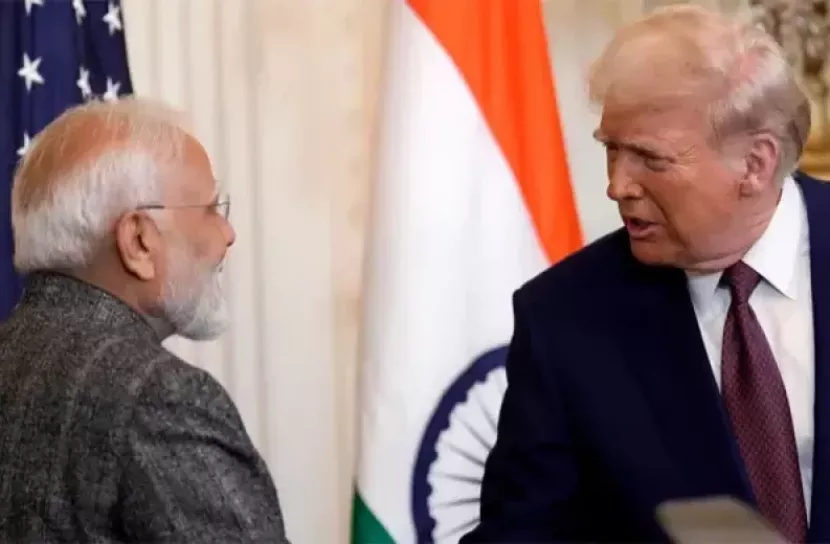
India is adopting a more openly critical tone towards US President Donald Trump’s administration, with New Delhi raising concerns over terrorism, Washington’s growing ties with Pakistan and US trade policies.
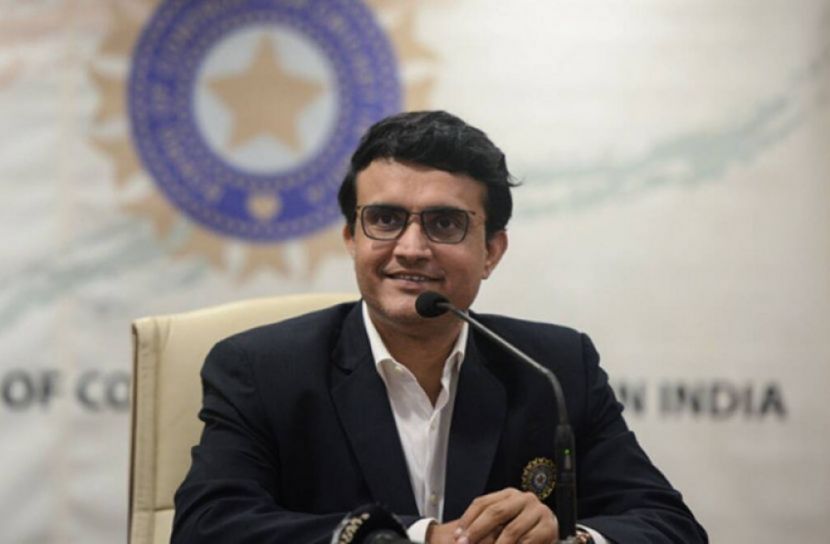
Speaking at an Asia Society event in New York following the UN General Assembly, Indian Foreign Affairs Minister S Jaishankar offered a pointed assessment of the current state of India-US relations.
Jaishankar said the United States had not shown sufficient understanding of India’s concerns over terrorism and had taken trade decisions that affected developing countries. His remarks reflect a noticeable shift in New Delhi’s approach after months of growing tensions between the two countries.
For decades, India has generally preferred to handle sensitive disagreements with friendly countries through diplomatic channels and away from public scrutiny. The approach towards Washington, however, appears to be changing as the Trump administration pursues a more transactional foreign policy.
Chietigj Bajpaee, a senior research fellow at Chatham House, said Jaishankar’s remarks provided a candid assessment of the current state of the bilateral relationship. According to him, the optimism that surrounded Trump’s return to the White House has weakened amid recent tensions.
Trade tensions
Trade remains one of the key areas of disagreement between India and the United States. Washington is India’s largest trading partner, with bilateral goods trade reaching $149.1 billion in 2025. India recorded a goods trade surplus of $58.4 billion.
Jaishankar criticised what he described as overly self-centred trade policies, arguing that countries should consider the broader impact of their decisions on other economies.
India and the US have been negotiating a trade agreement, with the two sides reaching a broad roadmap but yet to conclude a final deal. Agriculture has remained one of the most difficult issues, as India has traditionally maintained restrictions on agricultural imports to protect its farmers.
Jaishankar said differences in the structure of the two economies and the agricultural sector had made negotiations more complicated than initially expected. He added that there was now “more or less an understanding” on the trade agreement.
The two countries have also faced disagreements over tariffs. Trump’s administration has introduced a series of tariff measures affecting India, including a new 10 per cent global tariff and additional measures targeting countries that purchase Russian oil.
Jaishankar said the trade negotiations had created difficulties in bilateral relations but suggested that completing an agreement could help improve ties.
Ajay Bisaria, a former Indian diplomat, said New Delhi had become more vocal partly because of what he described as growing public criticism and a perception in India that Washington was putting pressure on the country.
Dispute over terrorism and Pakistan
Trade is not the only source of tension. Relations were also affected by the conflict between India and Pakistan following an attack in Indian-administered Kashmir that killed 26 civilians.
After the subsequent four-day conflict, Trump announced that the two sides had agreed to a ceasefire and repeatedly claimed credit for helping end the fighting. India has objected to any suggestion of third-party involvement in issues concerning Kashmir.
Meanwhile, Pakistan has sought closer ties with the Trump administration, including publicly praising the US president and nominating him for the Nobel Peace Prize.
Against this backdrop, Jaishankar highlighted terrorism as a major concern for India.
“As a country, perhaps there are very few countries which have been subjected to the kind of terrorism that we have from a neighbour as part of a deliberate, conscious policy over many, many decades,” he said, referring to Pakistan.
He added that the lack of sufficient understanding of India’s concerns over terrorism had become a problem in its relationship with Washington.
Former diplomat Bisaria said India’s approach towards the US had changed following the ceasefire episode and subsequent developments.
Harsh Pant, vice president of the Observer Research Foundation, said the Trump administration’s focus on Pakistan without adequately considering India’s concerns had contributed to New Delhi’s decision to speak more openly about its differences with Washington.
Domestic pressure in India
Domestic political considerations are also influencing the debate over India-US relations. The United States has historically been an important destination for Indian professionals through programmes such as the H-1B visa system.
However, the Trump administration has introduced measures increasing costs and restrictions surrounding the programme, while immigration has become a major political issue in the US.
Jaishankar said the economic benefits of worker mobility were increasingly being weighed against political concerns over immigration.
The issue has also attracted attention in India, where the government faces domestic criticism over its handling of relations with Washington.
Bisaria said the Indian government was under pressure to demonstrate that it would not simply accept US demands, particularly as important state elections approach.
Pant said issues such as migration and employment directly affect millions of Indians and that public perceptions of the United States were changing.
Possibility of a reset
Despite the growing disagreements, analysts say neither India nor the United States has abandoned the possibility of repairing relations.
Bajpaee said the current downturn could partly be attributed to the Trump administration’s transactional and unpredictable foreign policy rather than a fundamental breakdown in the India-US relationship.
He identified a bilateral trade agreement as an important factor that could help the two countries improve ties.
For New Delhi, Pant suggested that the current approach may involve managing differences while waiting for a change in the political environment in Washington.
The evolving relationship therefore reflects a combination of trade disputes, disagreements over Pakistan and terrorism, immigration concerns and domestic political pressures in both countries.
Sun News/ rabbi
Copyright © Sunnews24x7