Brazilians are returning to the polls on Sunday to choose between two candidates offering sharply different visions for the country's future, amid growing concerns over crime, corruption and a broader rightward shift across Latin America.
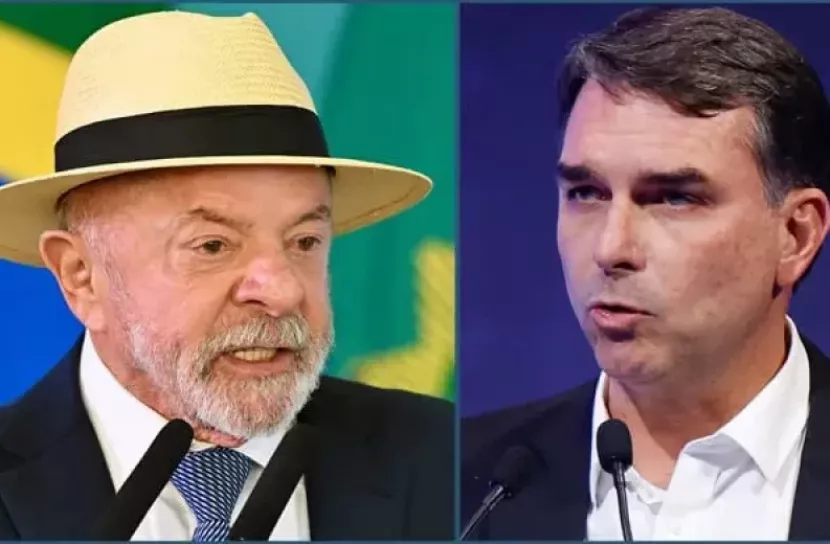
Leftist President Luiz Inácio Lula da Silva, 80, entered the presidential election campaign with a lead in nearly every opinion poll, hoping to secure a fourth term and extend a political career that has shaped Brazil for more than two decades.
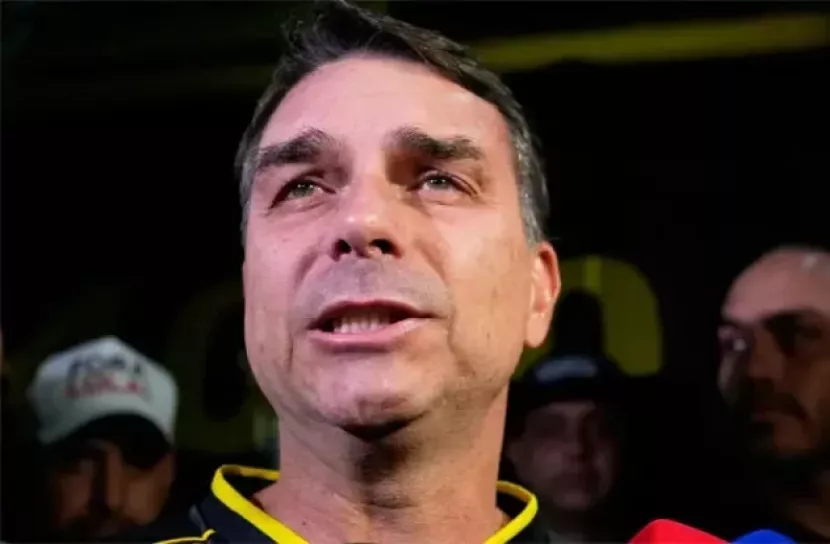
However, Lula has found himself in a runoff against Flávio Bolsonaro, the 45-year-old eldest son of former President Jair Bolsonaro. Flávio's stronger-than-expected performance in the first round overturned predictions and left one of Latin America's most prominent left-wing leaders facing a difficult battle.
Lula is seeking another term after decades in politics, while Bolsonaro is attempting to maintain his first-round momentum and secure victory in the final vote.
The outcome could have implications far beyond Brazil. As right-wing governments gain ground across Latin America, the runoff could determine whether the region's largest country moves closer to the Trump administration. A victory for Flávio would achieve what his father failed to accomplish in 2022: defeating Lula at the ballot box.
First-Round Upset Changes the Race
According to Brazil's Superior Electoral Court, Bolsonaro received 2.2 million more votes than Lula in the first round. Neither candidate secured the majority required to win outright, forcing both campaigns to compete for undecided voters while mobilising supporters in a deeply divided country.
The result exposed vulnerabilities in Lula's re-election campaign, including frustration over the cost of living and crime, as well as difficulties mobilising parts of his traditional support base.
It also demonstrated the continued strength of Jair Bolsonaro's political movement, even as the former president serves a prison sentence over his attempt to overturn his 2022 election defeat.
Crime, the Economy and Last-Minute Campaign Shifts
Public safety has emerged as one of the defining issues of the campaign.
A September survey by Quaest and Pax found that 28% of Brazilians considered violence the country's biggest problem, followed by corruption at 22% and the economy at 19%.
“That is ground that strongly favours the Bolsonaros, because they have made a tough approach on crime their flagship issue from the beginning,” said Brian Winter, editor-in-chief of Americas Quarterly and vice president of policy at Americas Society/Council of the Americas.
Flávio has pledged to designate major criminal factions as terrorist organisations, expand the prison system and lower the age of criminal responsibility.
“Those who think I'm radical on public security haven't seen anything yet,” he said on October 13, adding that even El Salvador's hard-line approach under President Nayib Bukele did not go far enough.
Lula has struggled to reconcile his party's traditional positions with growing demands for tougher action against crime. A widely circulated video of him saying last year that drug traffickers were also victims of drug users reinforced what Winter described as a longstanding perception that Brazil's left is soft on crime. Lula later acknowledged that he had expressed himself poorly.
During a televised debate last Sunday, Flávio challenged Lula over temporary prison leave. Lula defended rehabilitation but argued that serious offenders should not qualify. He then questioned whether Flávio would pardon his father.
Flávio did not respond directly during the exchange but has repeatedly said he wants Jair Bolsonaro to accompany him up the presidential palace ramp at his inauguration.
In another significant campaign shift, Lula signalled support for lowering the age of criminal responsibility from 18 to 16 for certain serious crimes, although he opposed including the change in a pending constitutional amendment.
Winter described the position as a major departure from the Workers' Party's longstanding opposition to such a measure.
“Lula is now yielding in the campaign's final days because he recognises that this may be his biggest vulnerability,” Winter said, adding that the move showed how far the president was willing to go to appeal to more conservative voters.
Cost of Living Remains a Concern
Lula has also faced criticism over the economy and affordability.
During his first two terms, a commodities boom helped lift millions of Brazilians out of poverty and into the middle class. This time, however, many voters say they have seen little improvement in their living standards.
Lula can point to low unemployment and easing inflation, but those indicators have not necessarily changed how households feel about everyday expenses.
Winter compared the situation to the 2024 US presidential election, when favourable economic statistics failed to overcome public frustration over prices under President Joe Biden and then-Vice President Kamala Harris.
“The headline numbers for the economy look good,” Winter said. “But everyday people keep saying that they don't feel like the economy is prospering. They feel like their standard of living has declined.”
Nevertheless, many voters remain loyal to Lula because of the social gains made during his first two terms, while fearing that a Bolsonaro presidency could roll back social rights.
Flávio has attempted to counter those concerns by distancing himself from some traditionally conservative positions.
On October 16, Brazil's Congress promulgated a constitutional amendment aimed at ending the country's traditional six-day workweek and gradually reducing maximum working hours without cutting pay. After previously opposing the proposal, Bolsonaro reversed his position and voted in favour.
“This is another case of the Bolsonaros being ideologically flexible enough to get elected,” Winter said. “Both sides are doing this in the race's final days. It's breathtaking.”
Women and Evangelicals Emerge as Key Voting Blocs
Both campaigns and political analysts agree that women could play a decisive role in the election.
Women account for nearly 53% of registered voters and have generally been less supportive of Bolsonaro-aligned candidates than men.
An October 15 Datafolha survey showed Lula leading among women by 49% to 40%, while Flávio led among men by 52% to 40%.
“Women are the key demographic,” Winter said.
Malu Gatto, an associate professor of Latin American politics at University College London, said the gender gap had widened since Jair Bolsonaro emerged as a major political force in 2018, with men increasingly gravitating towards the right and women showing greater support for the Workers' Party.
Both campaigns have also addressed violence against women, particularly femicide, following several brutal cases that attracted national attention.
Brazil recorded 1,571 femicides in 2025, the highest number since the crime was formally defined in law in 2015, according to the Brazilian Forum on Public Safety.
Gatto said the political right traditionally emphasises tougher criminal penalties for perpetrators, while the left places greater emphasis on victim protection and support services, including shelters and specialised assistance.
In his first televised campaign advertisement, Flávio featured his wife and daughters prominently.
“At home, they're the ones in charge. And that's a good thing,” he said, in a notable appeal to women by a political movement whose support has traditionally been stronger among men.
Former first lady Michelle Bolsonaro, who was elected to the Senate this month, has also played an important role in attracting women to the Liberal Party.
A public dispute between Michelle and Flávio became one of the most concerning moments of his campaign. Although the disagreement was later resolved, it highlighted the importance of her support among women and evangelical voters.
“Michelle has her own electoral capital, among women and among evangelicals,” Gatto said. “She has legitimacy with women and evangelicals in a way Flávio doesn't.”
Evangelicals, a growing demographic in predominantly Catholic Brazil, have become an important voting bloc for the right.
Datafolha found Flávio leading among evangelical voters by 62% to 29%, while Lula led among Catholics by 52% to 42%.
Regional Divisions and Voter Turnout
Geography is also expected to play an important role in determining the outcome.
Around 40% of Brazil's electorate lives in the Southeast, where Flávio received 51.4% of valid votes in the first round, compared with 39.7% for Lula.
The right-wing senator won all four states in the region, including São Paulo, Minas Gerais and Rio de Janeiro, the country's three largest electoral states.
Minas Gerais has backed the eventual winner in every direct presidential election since 1989.
“Its mix of industrialised cities and poorer rural communities makes it a microcosm of Brazil's political divisions,” said Lucas Fernandes, a political analyst at consulting firm BMJ.
Lula narrowly defeated Jair Bolsonaro in Minas Gerais in 2022. This time, Flávio won 48.24% of valid votes in the state, against Lula's 43.33%, a difference of nearly 590,000 votes.
In the Northeast, Lula's traditional stronghold, his first-round margin was smaller than in previous elections.
His share of valid votes in Maranhão fell by nearly five percentage points, the sharpest decline in the region, highlighting the challenge of mobilising his traditional support base.
However, the challenge extends beyond persuading voters to change their preferences. Both campaigns must also encourage supporters who stayed home during the first round to vote.
One in five eligible Brazilian voters abstained, making turnout potentially decisive in a race in which the first-round gap was just 2.2 million votes.
With 94% of voters telling Datafolha they had already made up their minds, mobilising existing supporters could prove as important as persuading undecided voters.
Why Has Lula's Campaign Lost Momentum?
The first-round result raised a difficult question for Lula's campaign and political analysts: how did a president who defeated Jair Bolsonaro in 2022 end up trailing his son in the next presidential contest?
“I think the most important takeaway is that today's Brazil is turning right,” Winter said, adding that voters had become more conservative over the past 10 to 15 years.
The trend reflects a broader political shift across Latin America, where several presidential elections since April 2025, including those in Ecuador, Bolivia, Honduras, Chile, Costa Rica, Colombia and Peru, have produced victories for right-wing or centre-right candidates.
A July Datafolha survey found that 44% of Brazilians identified with right-wing or centre-right political values, compared with 39% on the left or centre-left, reversing the balance recorded in 2022.
Fernandes cited tactical voting as another explanation for Flávio's first-round performance. Some voters abandoned their preferred candidates to support contenders they believed had a better chance of winning or defeating a particular rival.
“All the alternative candidates, at least the competitive ones, were on the right,” Fernandes told CNN. “So Flávio was much more likely than Lula to benefit from that shift in tactical voting, because he is ideologically much closer to the other candidates who were in the race.”
Another factor is widespread opposition to Lula's Workers' Party among voters who do not identify with the Bolsonaro movement but are determined to prevent Lula's re-election.
Fernandes said that sentiment was stronger than in 2022, when Lula benefited from widespread opposition to Jair Bolsonaro following a presidency marked by controversy over the government's handling of the COVID-19 pandemic.
He also pointed to Lula's campaign as having underestimated the importance of social media, while the right has long made it central to its political strategy.
“The right understood this and applied it on several fronts, not just to Flávio's candidacy, while the left failed to make that transition,” Fernandes said.
“The most important venue for Brazilian politics today is WhatsApp,” Winter agreed, explaining how family groups and private conversations shaped by memes and short videos can influence voters during the final days of a campaign.
The difference was reflected in campaign spending. Financial disclosures filed with Brazil's Superior Electoral Court showed that paid social media advertising was Flávio's second-largest campaign expense in the first round, while it ranked sixth among Lula's expenses.
Corruption Allegations and Political Fatigue
The association of the left with corruption has contributed to the shift towards the right, although allegations and controversies have affected both campaigns.
During Sunday's debate, Lula challenged Flávio to disclose his financial records and questioned his ties to Daniel Vorcaro, the former head of the collapsed Banco Master. Alleged connections involving Vorcaro have drawn scrutiny from influential figures across Brazil's political and judicial establishment, including the Supreme Court.
Flávio, meanwhile, accused Lula of corruption and raised allegations involving the president's eldest son, commonly known as Lulinha.
Lula's previous corruption convictions were annulled in 2021.
On Monday, Lula said he would submit documents to Brazil's electoral court authorising the disclosure of his banking and telephone records, as well as those of his five children. He said the information would be released if Flávio agreed to disclose similar records for himself, his family and his businesses.
Flávio responded that he would accept the challenge if Lula also disclosed the banking and tax records of his former chief of staff and released information about first lady Janja da Silva's expenses and spending on presidential corporate cards.
Political analysts say the allegations are deepening public frustration with the country's political system.
“It reinforces the disgust and apathy that Brazilians feel with their political system as a whole,” Winter told CNN.
Election Could Reshape Brazil's International Relations
The election has also attracted attention in Washington.
US President Donald Trump has praised Flávio Bolsonaro's electoral performance but has stopped short of formally endorsing him. Meanwhile, his administration's tariffs on Brazil and pressure over Jair Bolsonaro's prosecution have strained relations with Lula's government.
The tensions were evident during Sunday's debate, when Lula accused the Bolsonaro family of aligning itself with US interests at Brazil's expense. Flávio rejected the accusation and criticised Lula's foreign policy.
A Bolsonaro victory could bring Latin America's largest economy closer to the United States, particularly on security and organised crime, while strengthening the conservative political wave across the region.
Lula, by contrast, has emphasised multilateralism, relations with the Global South and China, Brazil's largest export market, and resistance to Trump's tariff measures as part of his defence of national sovereignty.
The next president will also face a more conservative Congress.
A narrow election result could test Brazil's political stability further, following Jair Bolsonaro's attempts to overturn his 2022 defeat, which preceded the January 8, 2023, attacks on government institutions. Bolsonaro denies wrongdoing.
For Lula, victory would mark another political comeback and extend his long career in power. For Flávio, it would represent the return of his father's political movement to the presidency despite Jair Bolsonaro's conviction and imprisonment.\
Sun News/ rabbi
Copyright © Sunnews24x7