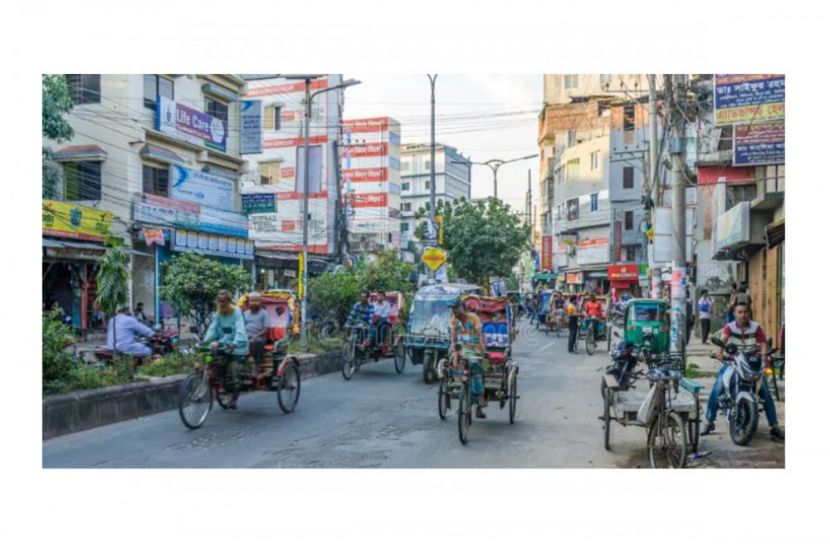
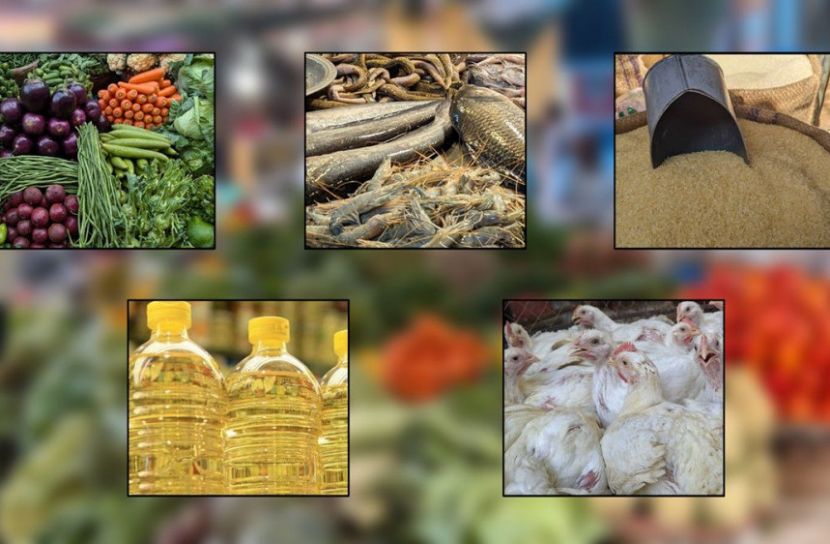
Prices of essential commodities in the capital Dhaka markets have been rising, with traders citing rainfall and increased transportation costs as key reasons. From meat, fish, and vegetables to eggs, rice, lentils, and edible oil—almost all categories are experiencing upward pressure. The prices of broiler chicken, pangas fish, and beef are moving beyond the reach of ordinary consumers, while hardly any vegetables are available below 60 taka per kg.
Overall, higher transportation costs have directly impacted production and supply chains. While traders blame rain and rising fuel prices, consumers complain that artificial shortages are being created to justify unreasonable price hikes.
In this situation, the cost of living for lower- and middle-income groups has come under increased strain, raising fresh concerns about market management and oversight.
On Friday (May 1), visits to several markets in the capital revealed continued price increases in essential goods.
Among vegetables, prices of onions, cucumbers, eggplants, chilies, and green papaya have increased further over the past week. Prices of broiler chicken and eggs have also risen. In grocery items, sugar, coarse lentils, and polao rice have become more expensive. although the price of bottled soybean oil has been raised, supply in the market has yet to normalize.
Traders said that recent rainfall has disrupted the normal supply of vegetables. In addition, higher fuel prices have increased transportation costs, which has affected vegetable prices.
Market observations show that prices of at least nine vegetables have risen in the past week. The sharpest increase was seen in cucumbers, which jumped from 30 taka per kg to 80–100 taka for hybrid varieties, with local varieties costing even more. Prices of eggplant, ridge gourd, snake gourd, sponge gourd, and tomatoes have increased by 10–15 taka per kg. Green papaya and chilies have risen by 20 taka, now selling at 80–100 taka per kg.
According to the Department of Agricultural Marketing, compared to last month, cucumber prices have risen by 111%, green papaya by 87%, local tomatoes by 25%, and eggplants by 7%.
Onion prices have also increased by 5 taka per kg over the past week, now selling at 40–45 taka per kg. However, onions had been sold at very low prices for a long time this year, limiting farmers’ profits. The recent increase may help improve their margins.
Currently, vegetables are being sold at the following prices: potatoes 20–25 taka/kg, tomatoes 60 taka, bitter gourd 60–65, pointed gourd 60, bottle gourd 50–60 per piece, papaya 70, carrots 80, okra 60, snake gourd and ridge gourd 70, cucumber 100–110, yardlong beans 80, teasel gourd 120, eggplant 80–100, and sponge gourd 60–70 taka per kg.
Vendors reported that heavy rain has reduced vegetable supply, as fields in many areas are waterlogged, preventing farmers from harvesting.
At the same time, global fuel price increases have led the government to raise domestic fuel prices: diesel by 15 taka per liter, kerosene by 18, octane by 20, and petrol by 19 taka. This has further pushed up commodity prices.
Traders noted that transport costs for vegetable trucks have increased by 5,000–7,000 taka, especially from regions like Dhaka, Chattogram, and Sylhet, while rain has reduced supply in recent days—both contributing to higher prices.
Egg prices have also risen, with a dozen farm eggs selling for 120–130 taka, compared to 100–110 taka earlier. This increase is attributed to higher transport costs and some supply shortages.
Broiler chicken prices are now 190–200 taka per kg, up from 150–160 taka about a month and a half ago. Sonali chicken prices have slightly decreased to 350–360 taka per kg, though they were higher earlier.
Beef is being sold at 780–800 taka per kg, with most vendors unwilling to sell below 800 taka. Traders say prices are unlikely to fall further as the upcoming Eid-ul-Adha influences cattle pricing.
Consumers have expressed frustration over rising prices, saying it is becoming increasingly difficult for low-income people to cope.
Fish prices have also increased by 10–20 taka per kg over the week. Pangas is selling at 220–260 taka, tilapia at 230, pabda at 380, rohu at 320–360, katla at 400, tengra at 850, and shrimp at 1,000–1,250 taka per kg. Hilsa (500g size) is priced at 1,500–1,600 taka per kg.
Polao rice prices have increased by about 15 taka per kg, now reaching around 190 taka for packaged rice. Open market, it sells for 150–160 taka.
Sugar remains at 105–110 taka per kg after a recent increase, while coarse lentils have risen to 90–95 taka per kg.
Soybean oil prices were recently raised by 4 taka per liter, bringing bottled oil to 199 taka per liter and loose oil to 180 taka. However, despite the price hike, bottled soybean oil remains in short supply in the market, a situation persisting for about three months.
Traders hope that supply will improve within a few days following the price adjustment.
Fuel costs affect every stage of food production—from paddy processing to storage and transport—so rising fuel prices have also pushed up rice prices. Currently, coarse rice sells at 55–60 taka per kg, medium rice at 60–68 taka, and miniket rice at around 88 taka, all higher than a week ago.
Some traders argue that while fuel costs may justify a 2–3 taka increase per kg, actual price hikes of 5–6 taka are excessive and driven by wholesale market pressure.
Consumer rights activists have criticized the government’s decision to allow edible oil price increases, alleging that it reflects yielding to business pressure rather than protecting public interest.
They also argue that most of the edible oil currently in the market was imported months ago, so recent global price increases should not justify immediate local price hikes. Instead, they allege that supply was deliberately restricted to create artificial shortages.
According to them, ordinary consumers are effectively held hostage by dishonest business groups, while regulatory authorities fail to take effective action despite being aware of the situation.
sunnews/ra
Copyright © Sunnews24x7